
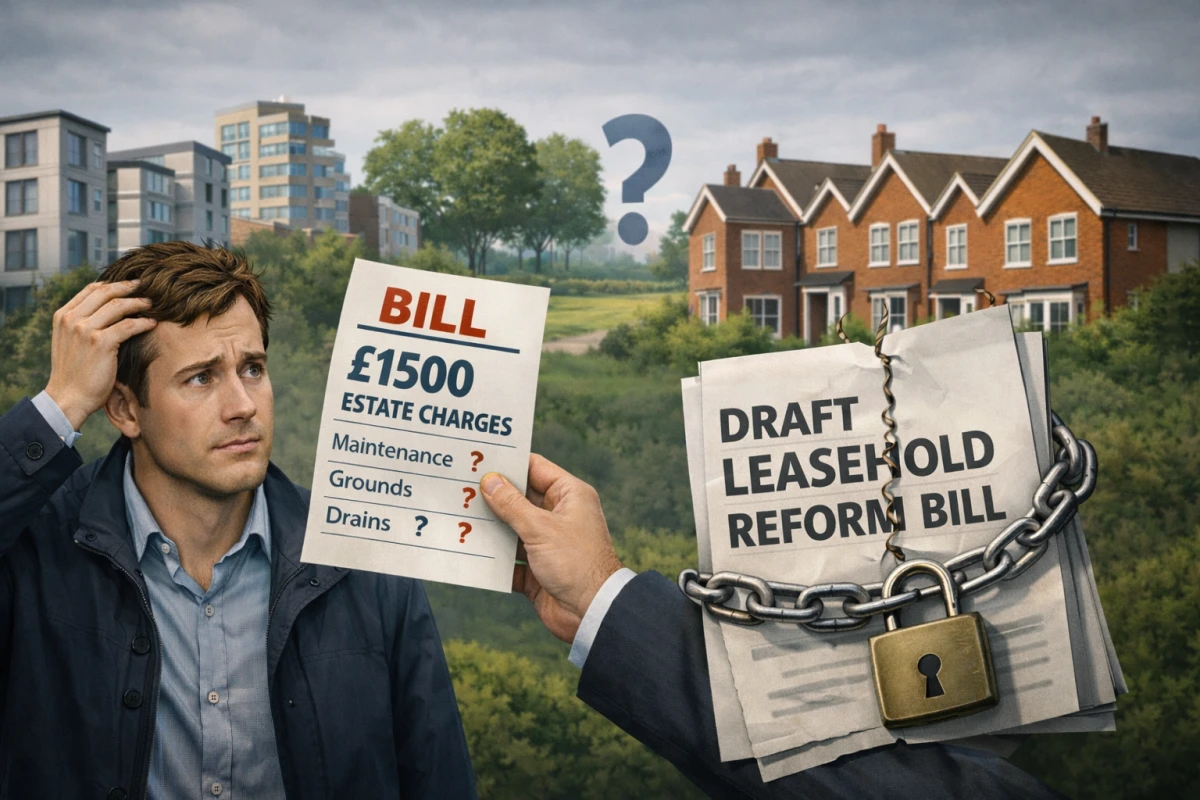
The government has published a draft Commonhold and Leasehold Reform Bill, setting out planned changes to leasehold and commonhold in England and Wales.
The draft confirms that freeholders who pay estate service charges on managed estates are unlikely to see significant new protections under this legislation.
The bill mainly focuses on leasehold reform. Measures include proposals to cap existing ground rents, ban new leasehold flats, abolish forfeiture, and make it easier for leaseholders to convert to commonhold.
- For freeholders on private estates, the draft does not set out a clear new right to challenge the reasonableness of these service charges in the same way leaseholders can challenge service charges.
The draft does include provisions referring to estate rentcharges, indicating that the issue is being acknowledged within the reform package. However, the proposals do not amount to a full reform of estate service charges or a clear set of protections for freehold homeowners who are required to contribute to the upkeep of roads, lighting, drainage, and shared green spaces.
Campaigners have argued for years that estate charges can rise without adequate oversight and can be difficult and costly to dispute. Many had hoped the draft bill would address this more directly.
- As it stands, the draft suggests that while leaseholders are set to gain stronger protections, freeholders affected by estate charges remain largely outside the main scope of the reforms.